More than Parking
Basel, Switzerland / 2025
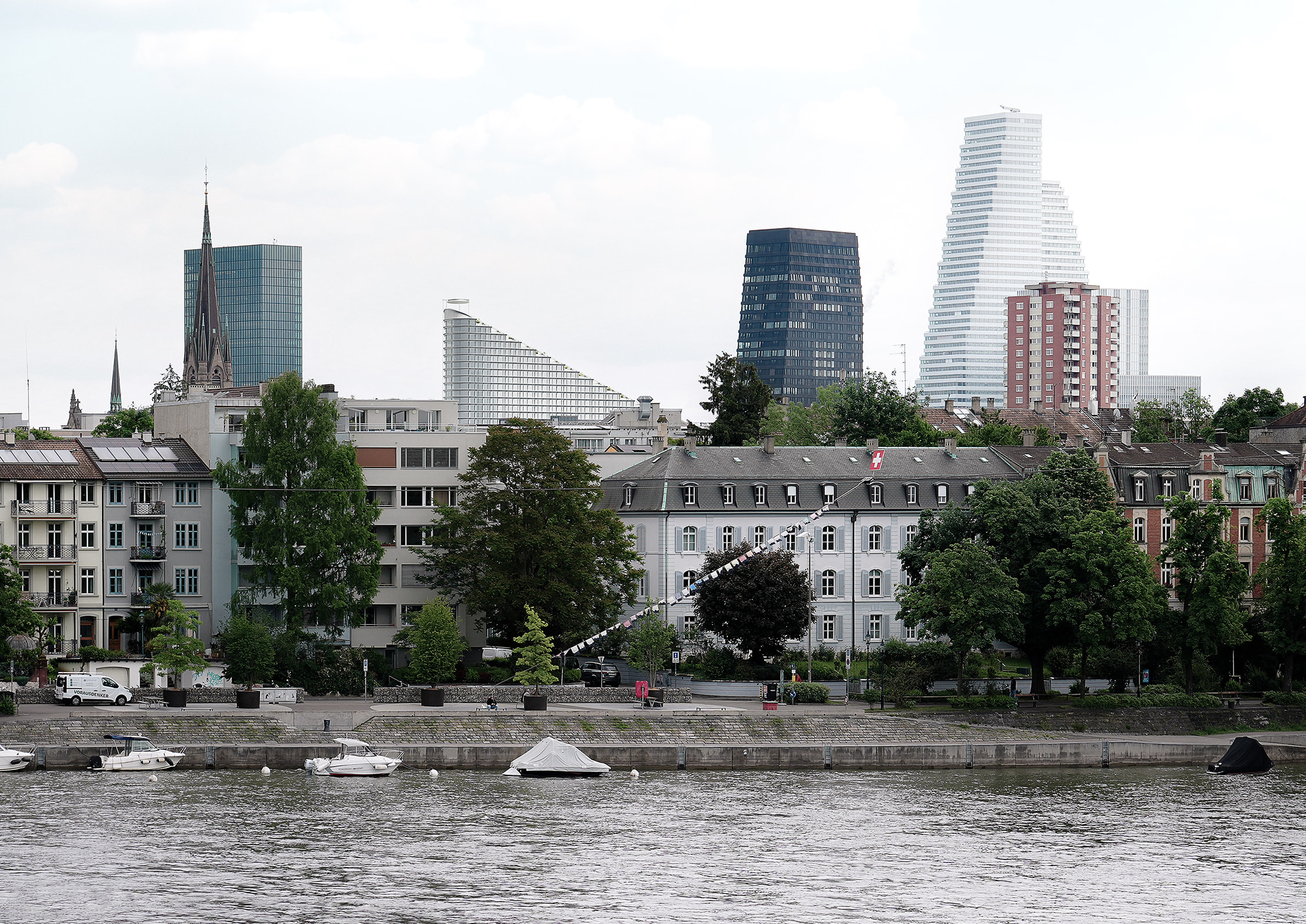
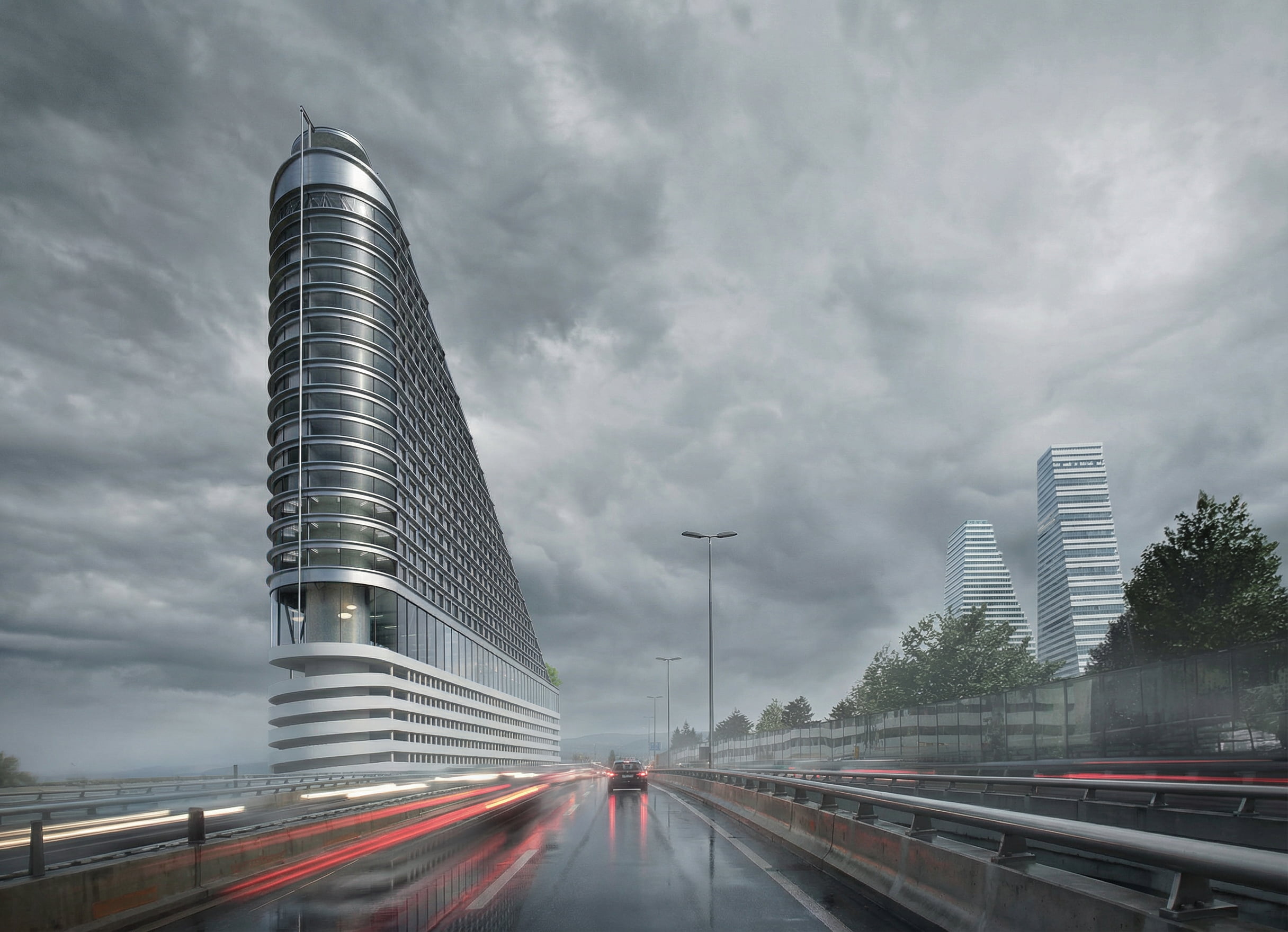
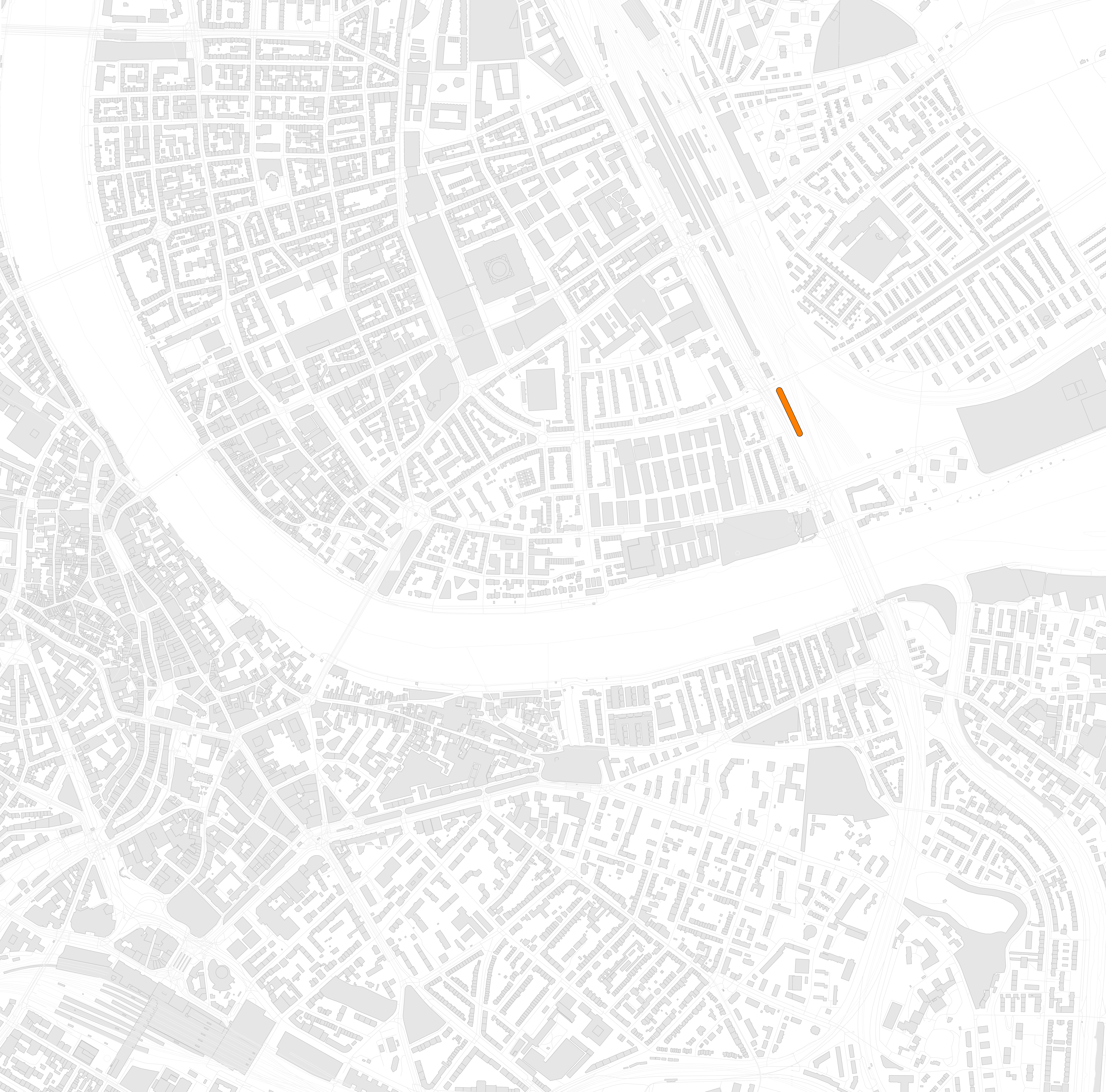
On Schwarzwaldstrasse in Basel’s Wettstein quarter, rising from the 600-bay Roche garage, a daring experiment in cooperative densification turns an ordinary parking facility into a mixed-use miniature neighborhood. Instead of demolishing a perfectly sound structure, the project builds upon it, stacking 110 affordable apartments while the entire parking capacity remains in use. In doing so, it answers two of Basel’s most pressing urban agendas: the city’s newly adopted parking strategy, which relocates curbside spaces to edge-of-center garages so streets can be reclaimed for trees and cyclists, and the need to house a population forecast to climb from 180,000 to 220,000 within the next ten years. Though technically at the city’s periphery, the site is anything but isolated; it sits a short walk from Basel Badischer Bahnhof, flanks the motorway, and will soon gain a dedicated S-Bahn stop, knitting thedevelopment seamlessly into the regional transit web.
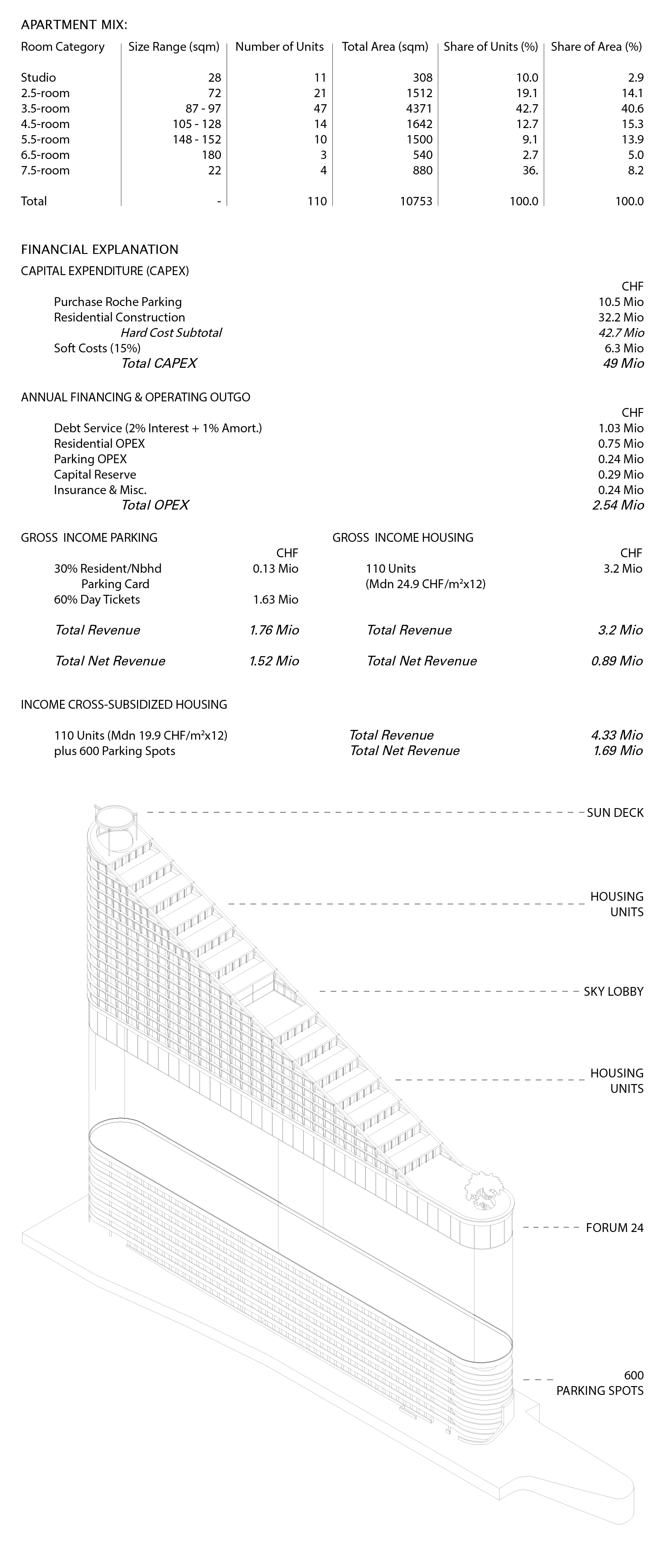
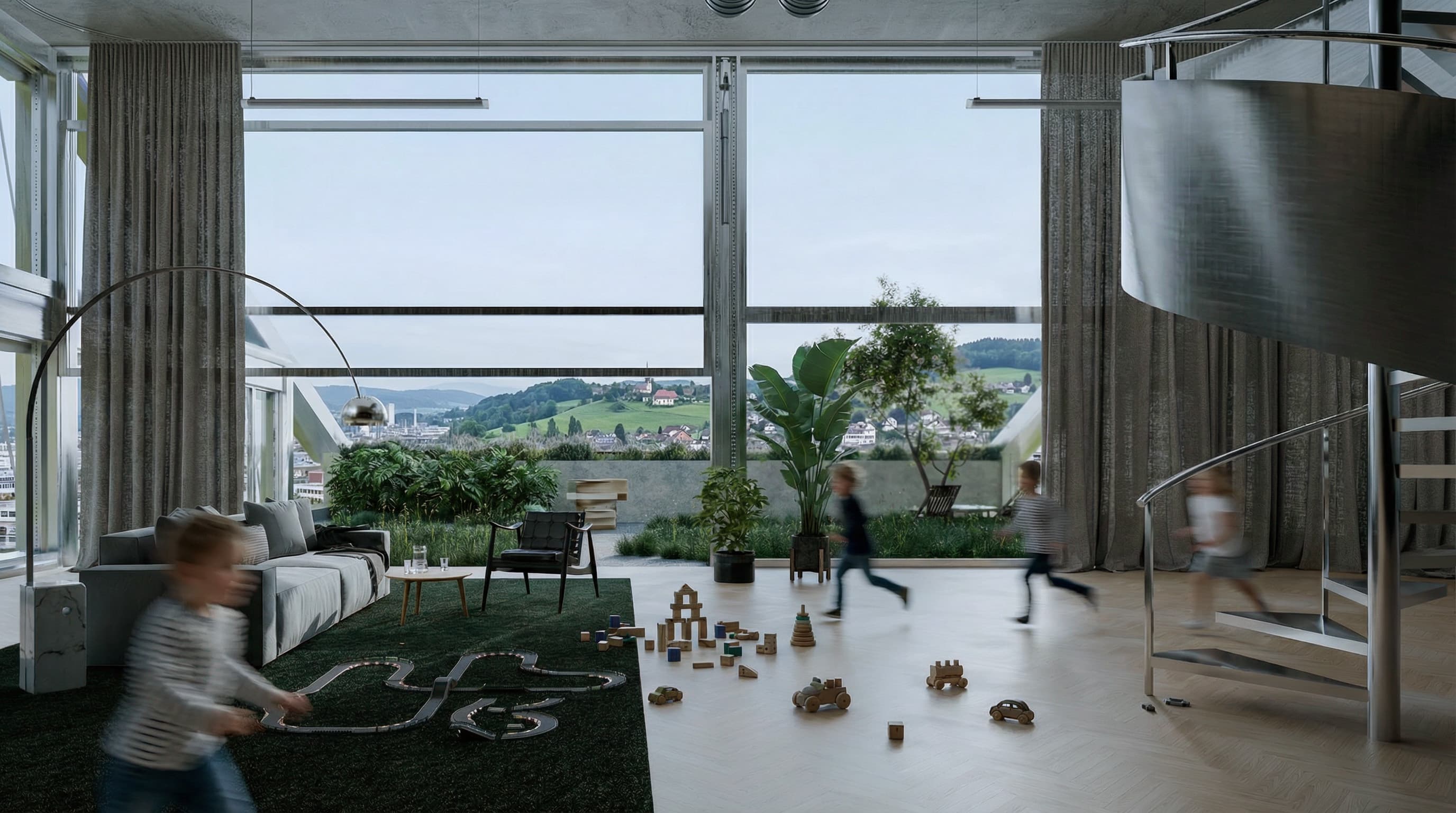
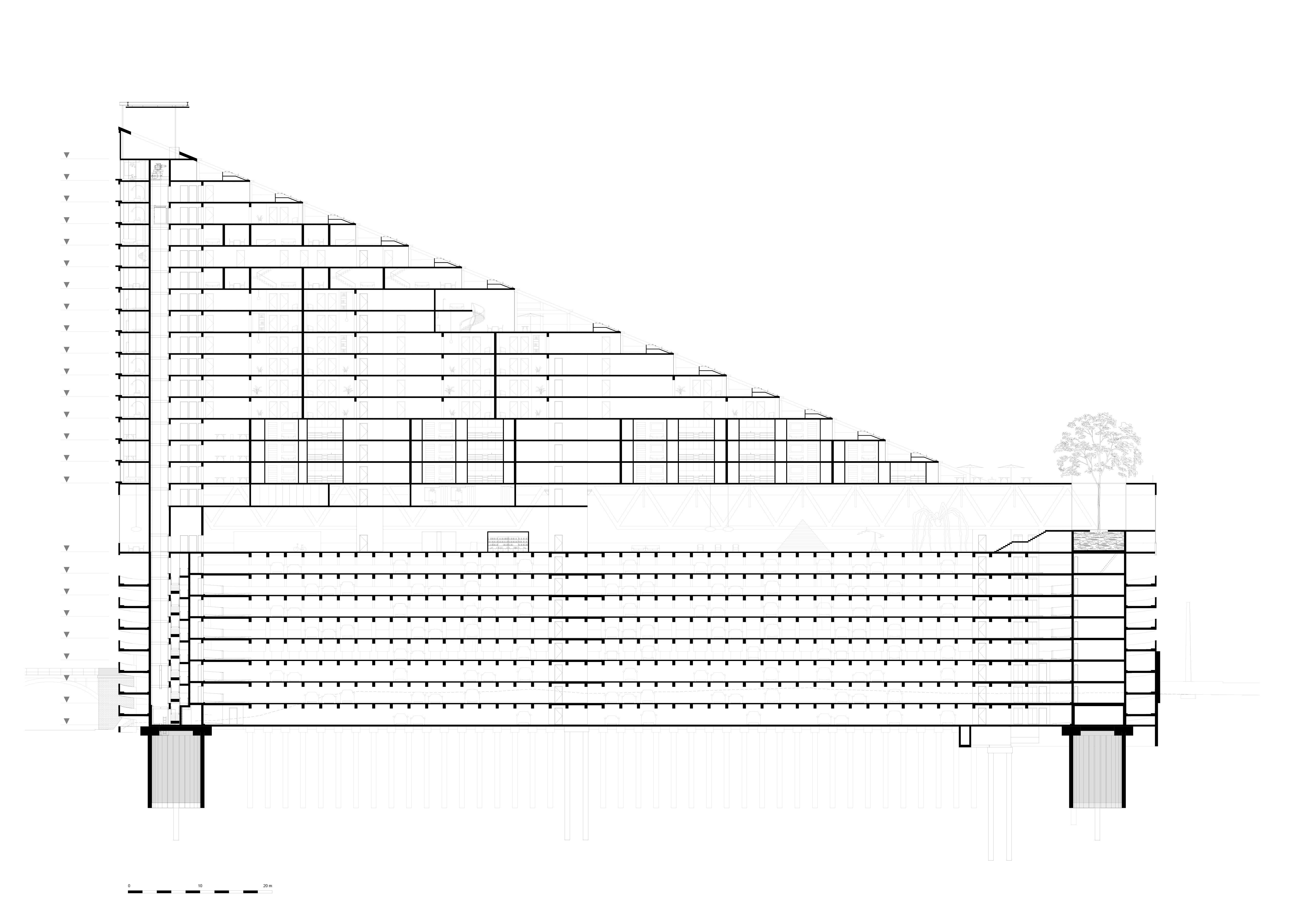
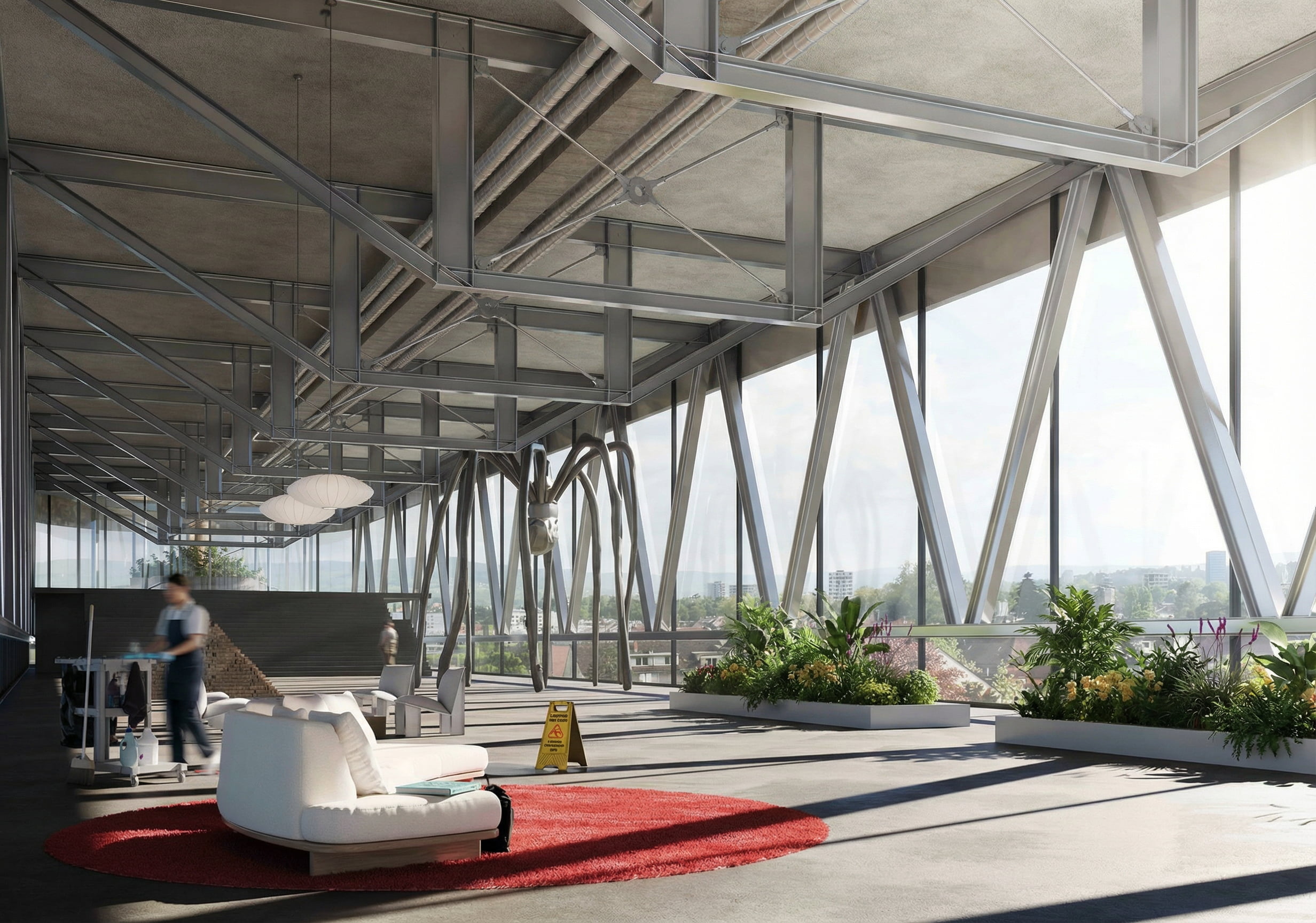
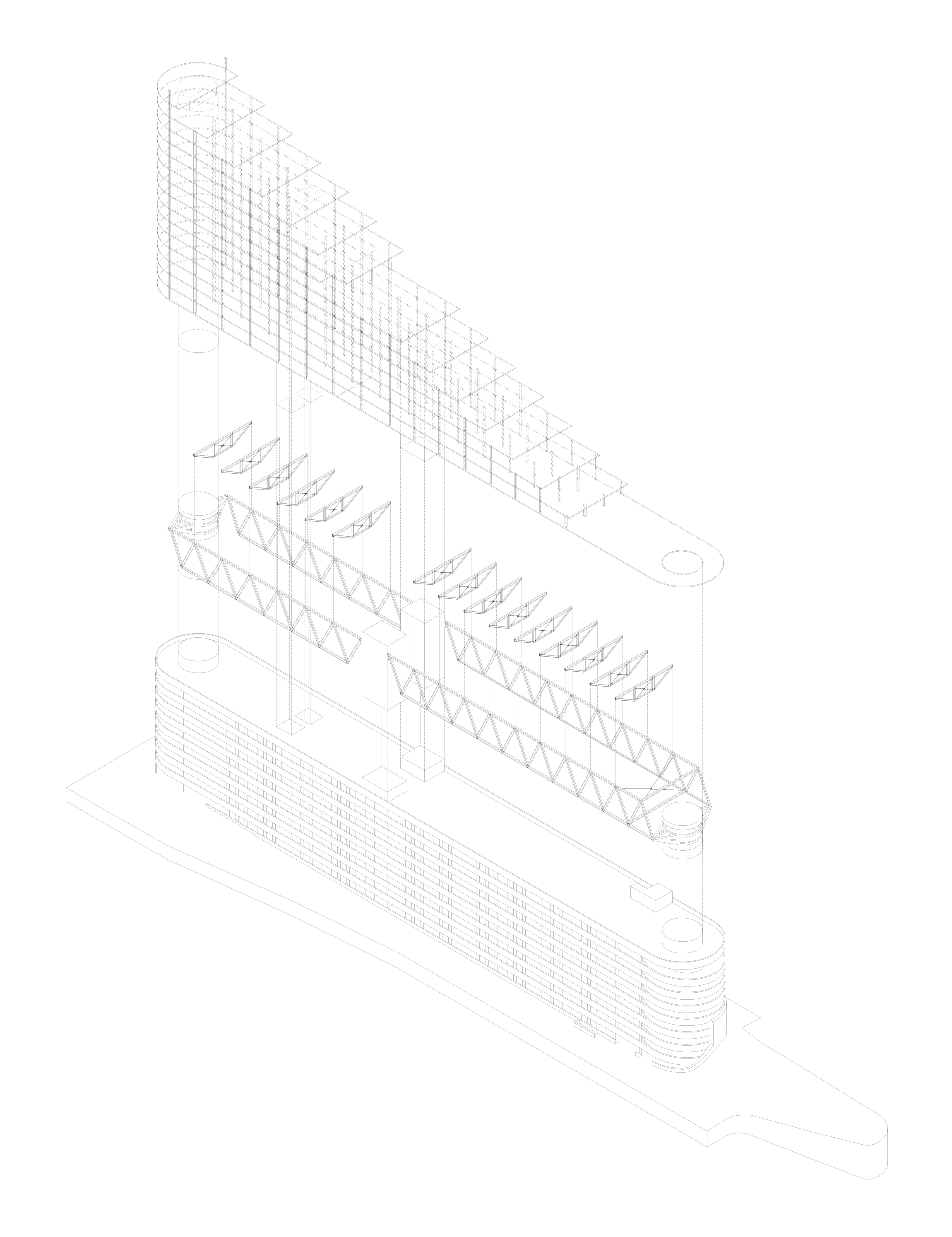
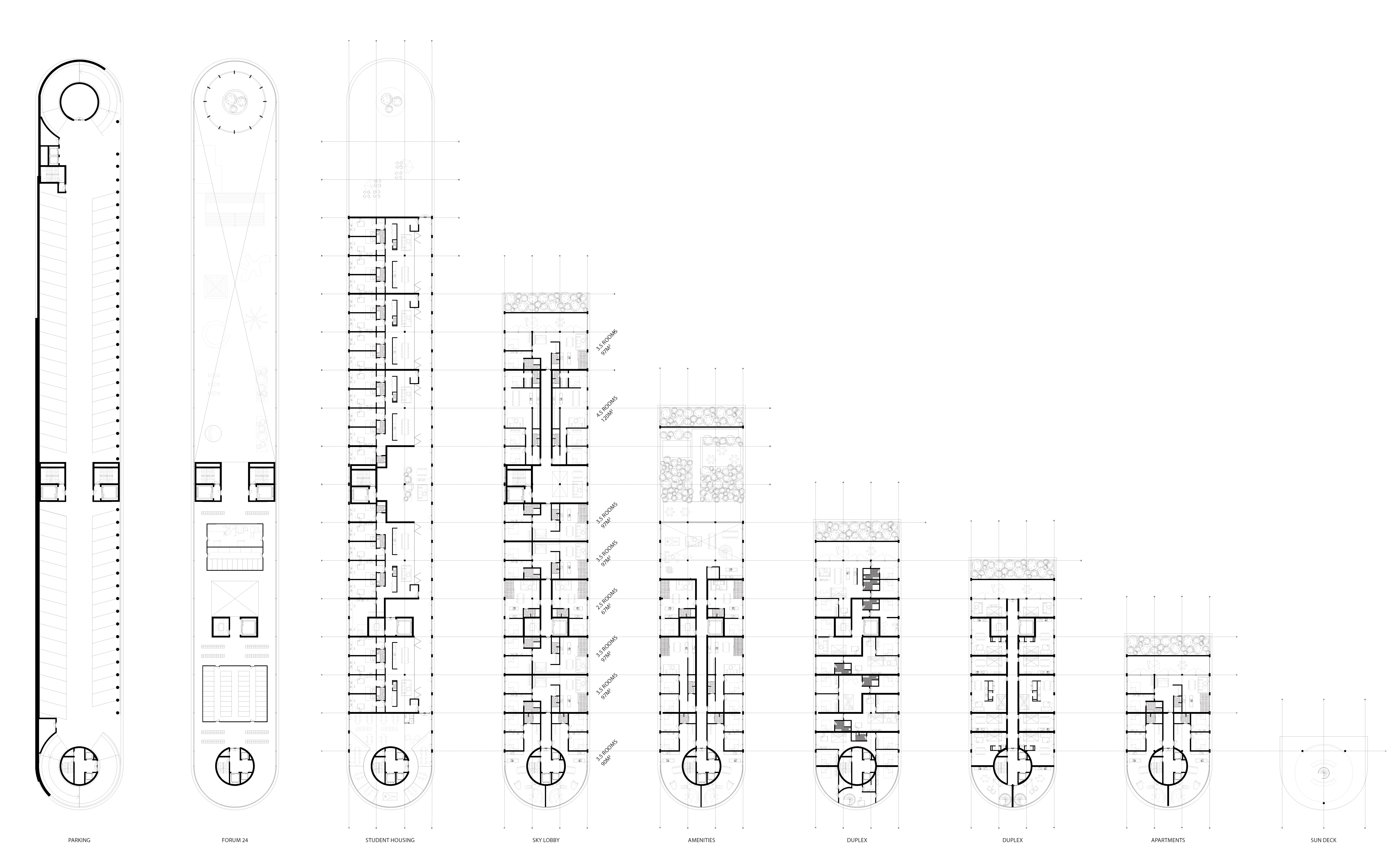
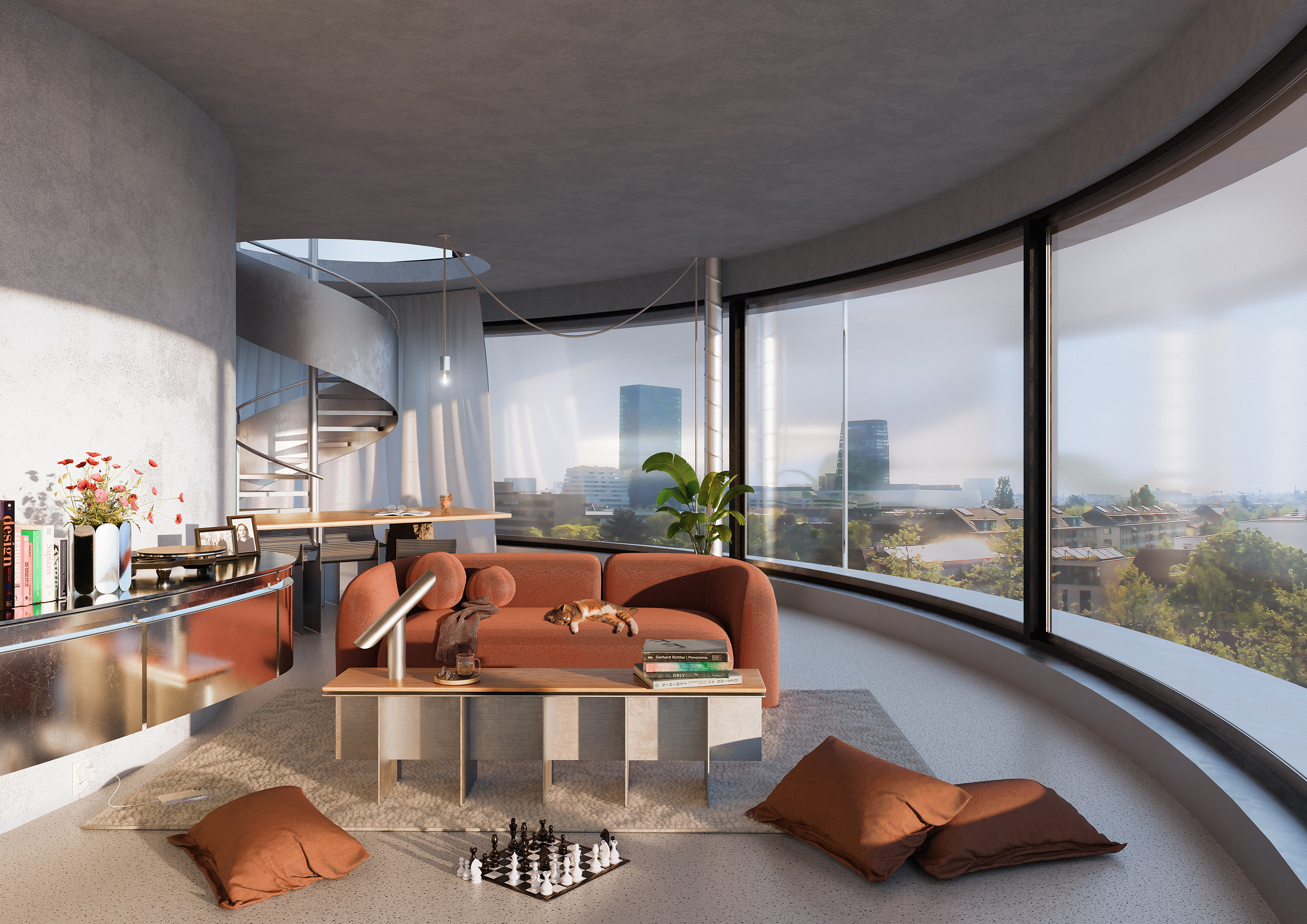
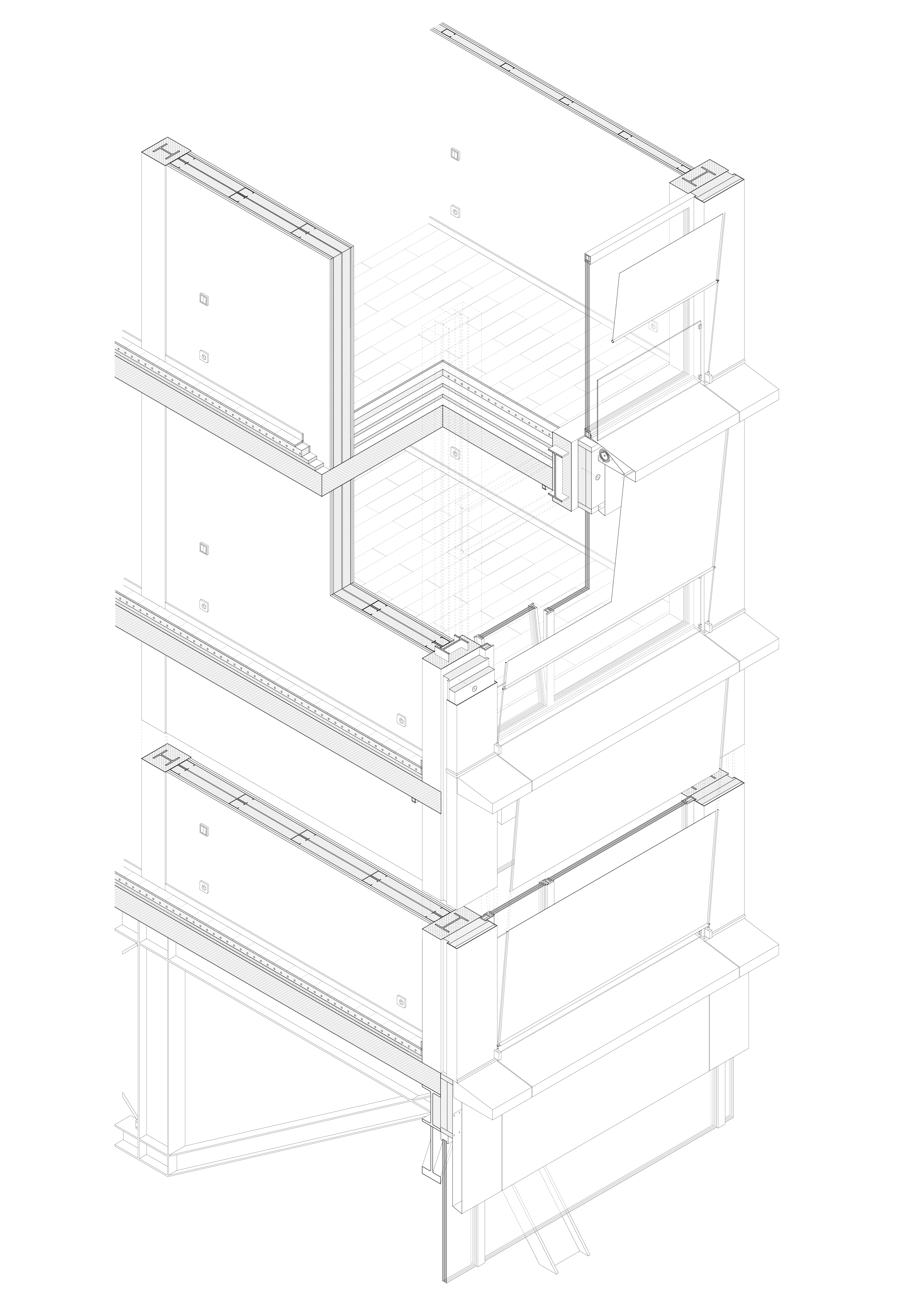
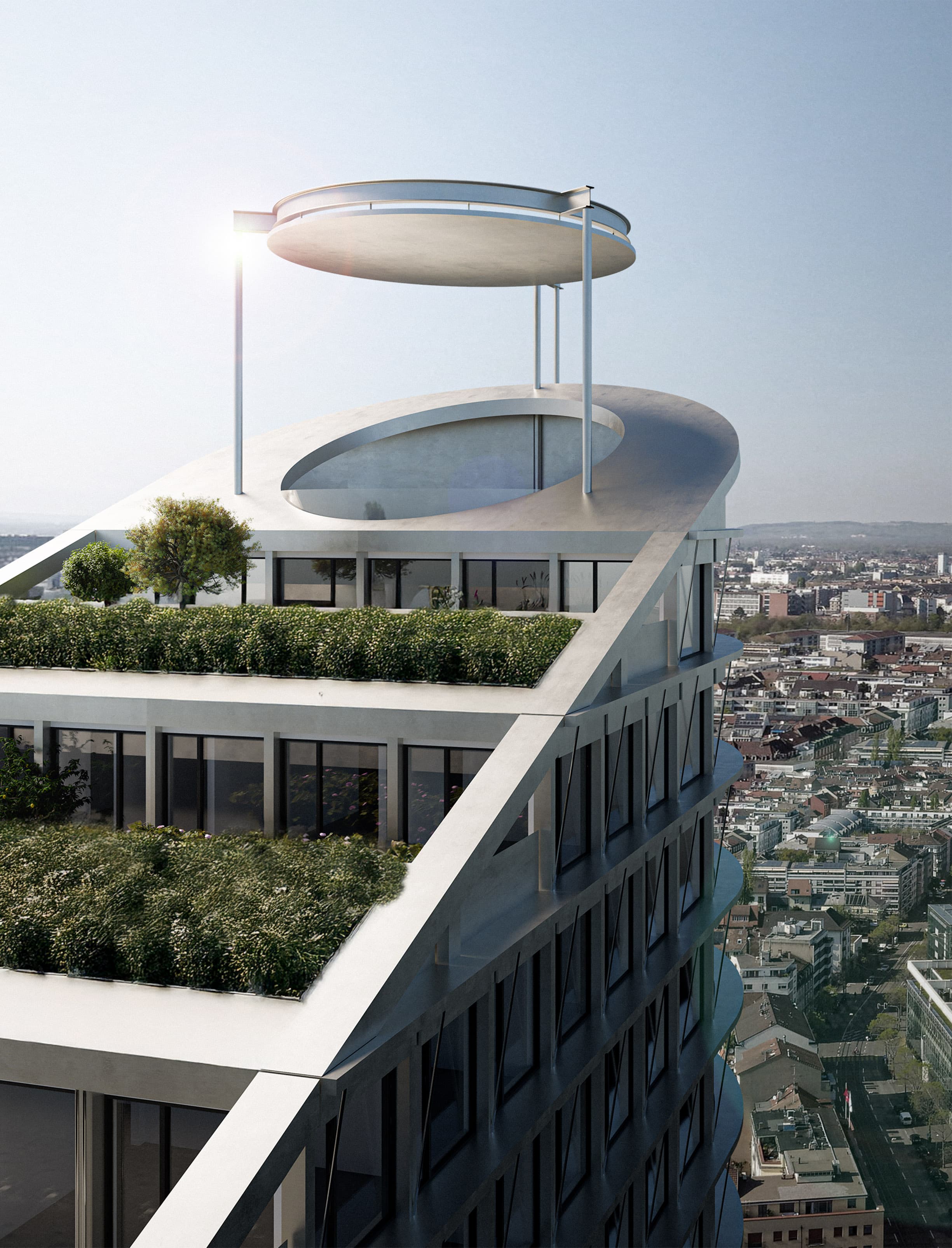
At the hinge between cars and homes stands Forum 24, a two-story public threshold that functions as both a lobby and a living room for the district. Here, commuters and residents alike filter through a light-filled hall edged by lounges, co-working tables, and a flexible gallery where local artists rotate their work. Above this threshold, the residential stack gradually changes character with height. The lowest terraces are carved into generous cluster flats that encourage student co-living; mid-levels host efficient one, two and three-room apartments whose deep loggias double as outdoor rooms; a band of duplexes arranged around the sky lobby gives young families a rare balance of privacy and community; and a crown of senior apartments allows long-time neighbors to downsize without leaving familiar streets. All of these homes rest on a 7.5-metre structural grid that transfers loads into the garage’s robust ramp cores, ensuring the parking facility stays fully operational.
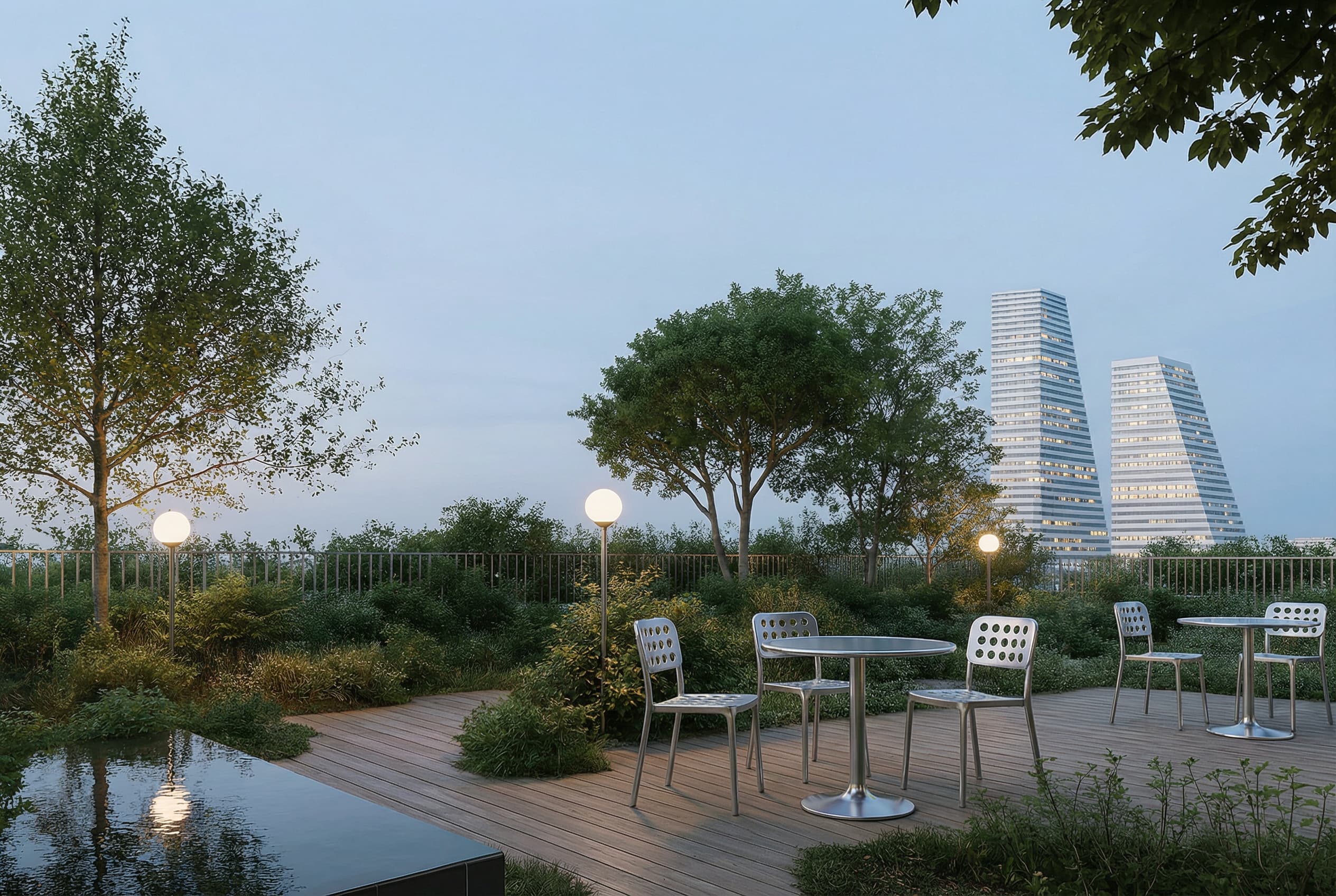
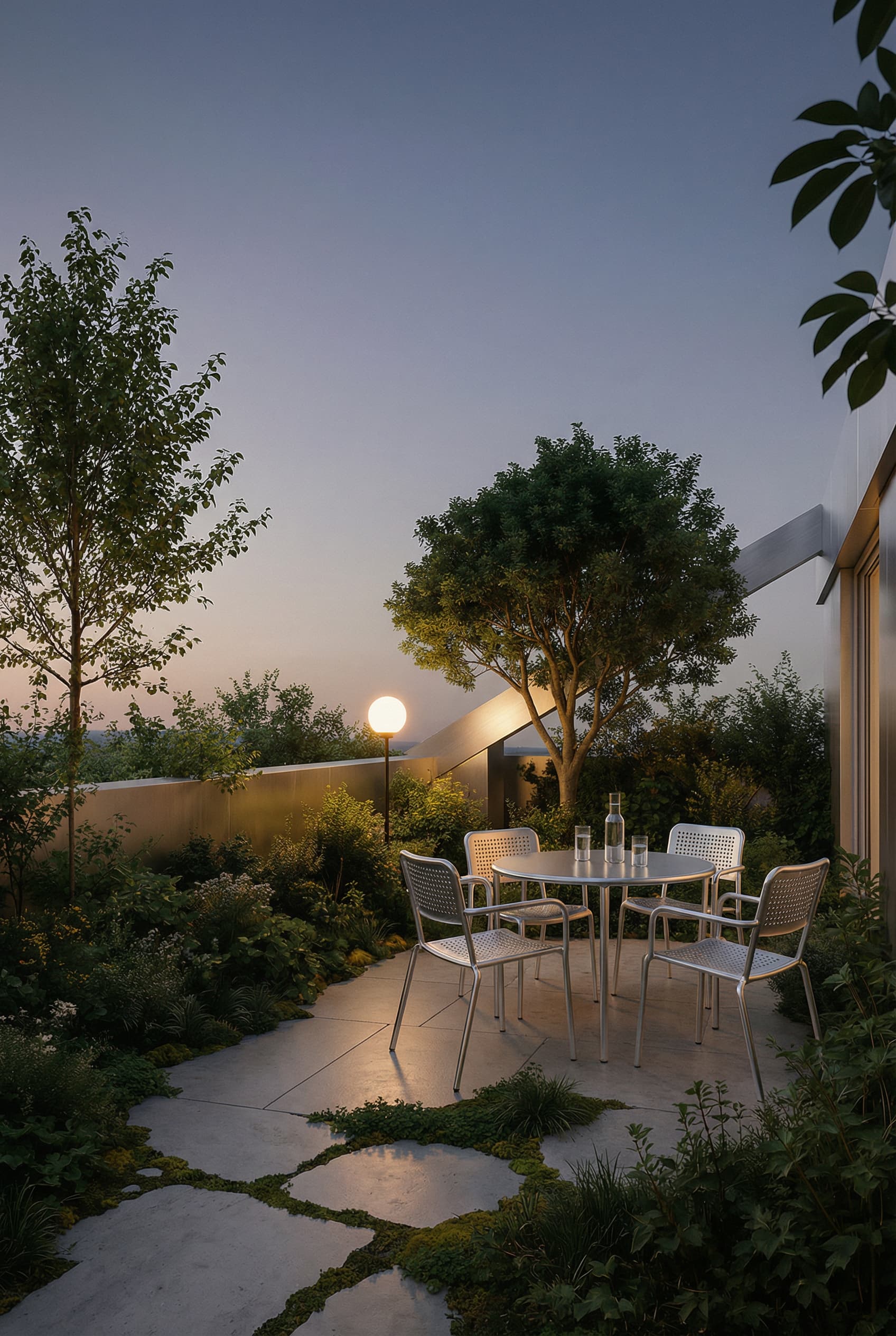
The massing itself terraces from it’s peak at 85 meters down to 24 meters, satisfying Basel’s daylight regulations while carving sun-drenched south-facing gardens into the façade. These planted setbacks become a planted urban oasis that buffers highway and rail noise. Financially, the scheme is as elegant as its silhouette: parking fees—more than one million Swiss francs each year—cross-subsidize the cost of affordable rents above, demonstrating that adaptive reuse can weave social, environmental, and economic value into a single, resilient piece of city.
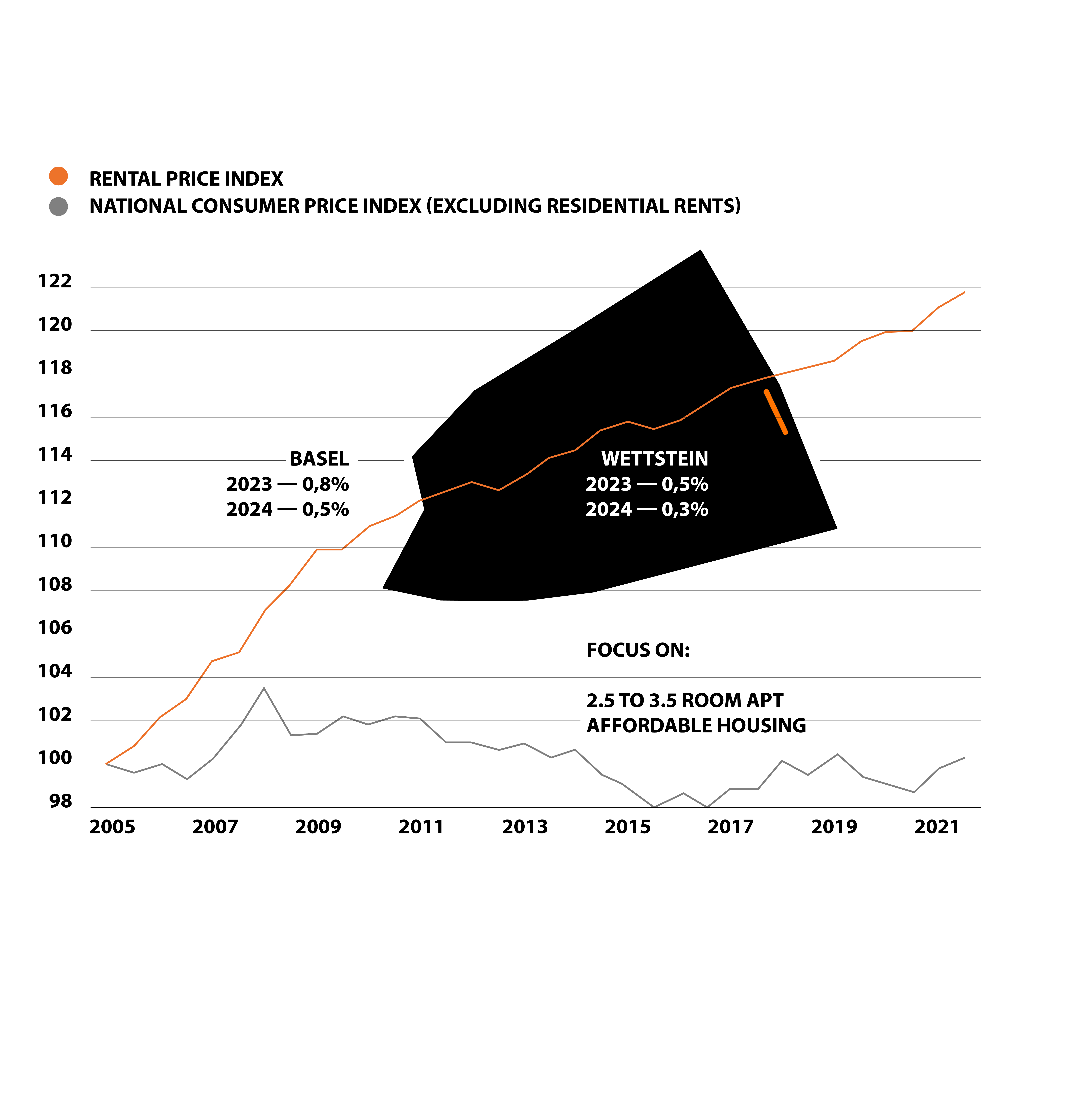
Charging modest coop rents (30% below market - 20% below coop) still generates surplus for faster amortisation or social funds. Dual revenue streams hedge against economic cycles. Parking decks can be repurposed if private car demand falls.Bottom line: Parking revenue covers 46% of annual financing & operating costs, enabling 50 – 75% rent reductions while the project remains cash neutral or better.